VerifiedSAFE
Infection prevention for operating rooms, where the software is what turns a cleaning service into a compliance record a hospital can hold up afterwards.
At a glance
- Baseline pass rate, after the hospital's own terminal clean
- 0.24%
- Pass rate across 5,694 verification tests
- 100%
- Recorded tests in four months
- 9,930
- Operating rooms
- 7
The problem
Hospital-acquired infections start on surfaces. Most environmental services protocols define clean by process, not by measurement: the room was wiped down, therefore the room is clean. Nobody tests, so nobody knows.
The high-touch items that matter most are the ones most often missed. Anesthesia carts. IV poles. Tourniquet hoses. Overhead lights.
DisinfectWell's answer was test, disinfect, verify, with a handheld ATP luminometer reading each surface before and after treatment and no room released until every point passed. That only works if the readings land somewhere immediately. Frank Robles served as DisinfectWell's chief technology officer and the firm built the platform that did it.
What we built
- Device integration. Internet-connected ATP luminometers post readings straight into the platform, by test location, in real time, with no transcription step.
- Pass and fail at the point of work. A reading above threshold fails automatically and the location has to be recleaned and retested before the room is released.
- Test plans modeled to the surface. A facility down to the room, the room down to its named test locations. Nine per operating room in this program.
- Exception reporting naming exactly which locations failed and what they read, plus a contamination improvement index and per-room trend charts.
- Audit-ready output. Every result, pass or fail, timestamped with the technician's name and kept permanently.
What the numbers did
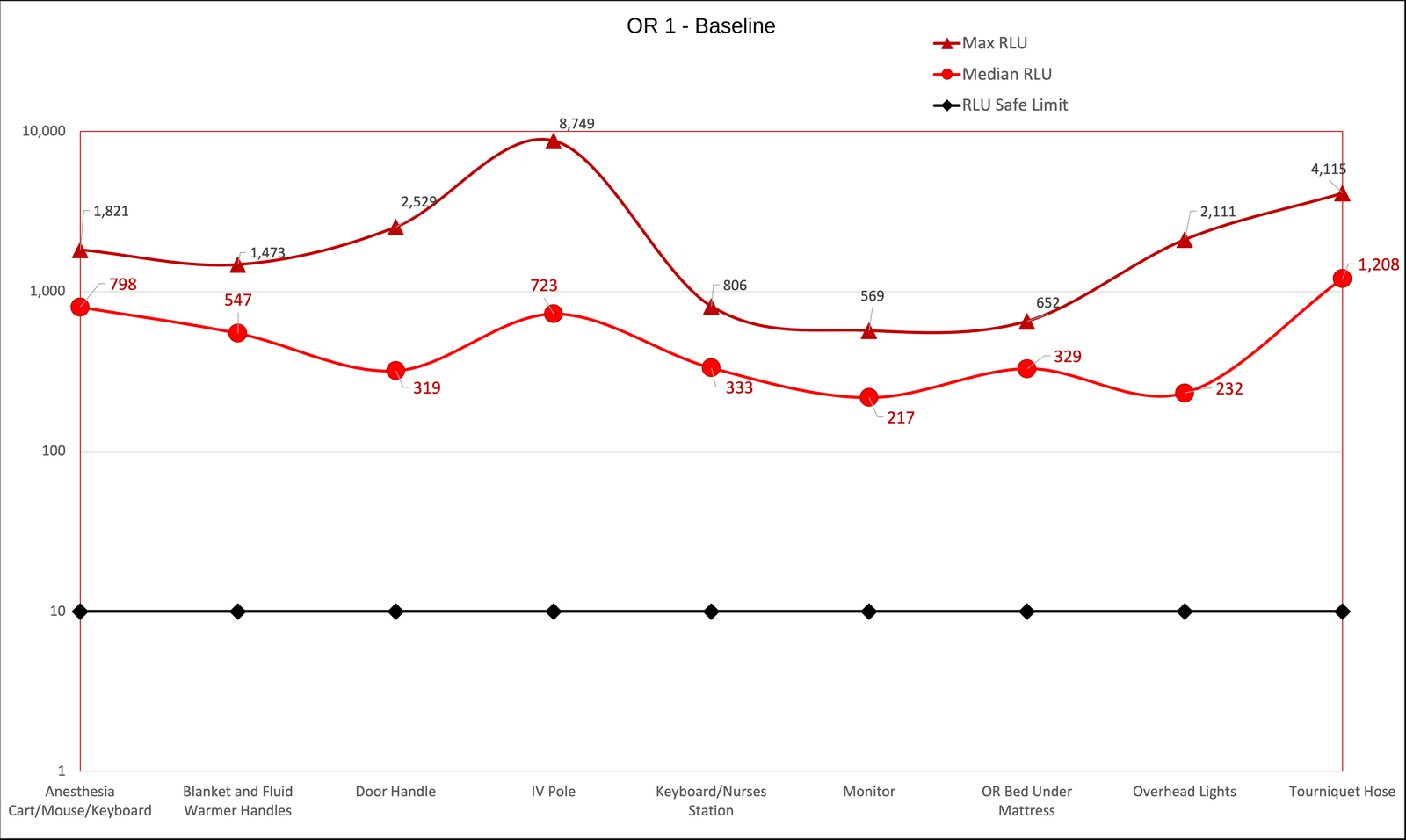
Seven operating rooms at a large hospital network, May to August 2023. Every figure below was recomputed from the raw exports rather than taken from a deck.
- Baseline: 414 tests, one pass. A 0.24 percent pass rate, mean 909.7 RLU. Those readings were taken after the hospital's own terminal clean, which is the point of the finding.
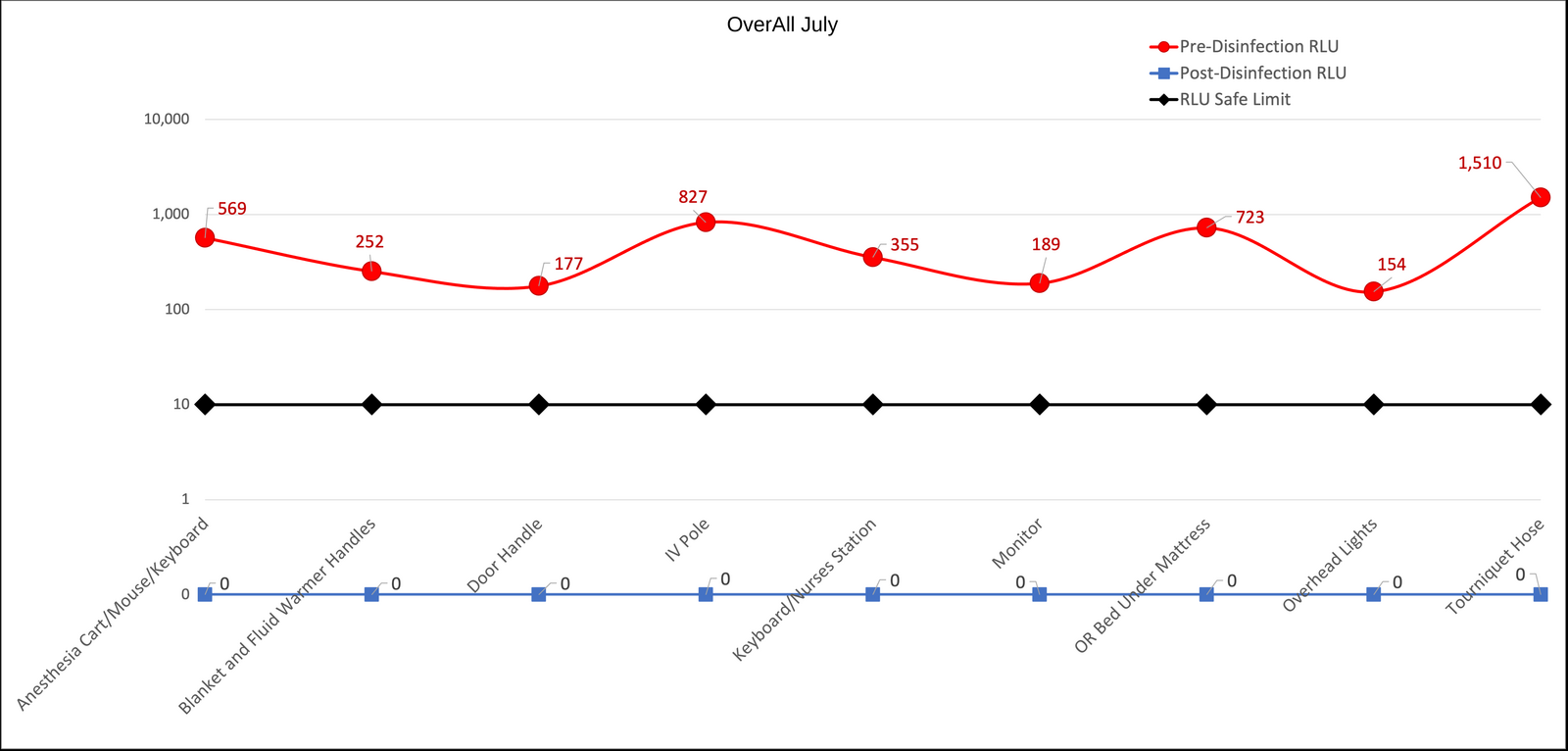
- After the program: 5,694 verification tests at a 100 percent pass rate, mean 1.47 RLU. July: 2,488 tests. August: 2,039 tests.
- 9,930 recorded tests across the period.
How it is built
A Django application with a JavaScript front end running against the luminometer vendor's API. Two-factor login with separate roles for field specialists, facility administrators, executive reporting and a licensee tier above them.
- Django
- Python
- JavaScript
- Device API integration
- Two-factor auth
- Role-based reporting
How we ran it
Frank held the chief technology officer role and Robles Industries built and delivered the platform, with the engineering team sourced and managed by the firm.
He wrote the MVP definition himself, including the decision to ship the user model, facility and room definitions and an admin path for report data first, and to defer mobile until the platform was proved. The analysis of the hospital study was done in house, from the raw exports, room by room.
What we can start on
A patient-facing or clinician-facing product where the compliance artifact matters as much as the feature. A device or EMR integration. Or a hard look at a measurement program that is producing reports nobody trusts.
Next record: DigitalTown civic identity
All records are also bound as one document: Case record set (PDF).